How Prison Education Supports Learners with Learning Difficulties
Adult Provision
A disproportionate number of people in custody have learning difficulties, learning disabilities or additional learning needs, with many entering prison without a formal diagnosis or any history of tailored support in mainstream education.
For some learners, this means years of struggling with reading, writing, concentration, communication or confidence before their needs are properly recognised. These barriers can shape their experience of school, work and the justice system.
Prison education has a unique opportunity to change that. By identifying learning needs early and delivering inclusive, adapted teaching, prison education can help learners build confidence, gain skills and access qualifications that may once have felt out of reach.
At Novus, we deliver inclusive education across prisons in England and Wales, supporting learners with a wide range of needs through tailored learning plans, specialist support and accessible teaching approaches.
In this blog, we explore the scale of learning difficulties in prison, why so many needs go undiagnosed, how early screening can change outcomes and why inclusive education is so important for rehabilitation.
The scale of learning difficulties in prison
Learning difficulties and disabilities are significantly over-represented in the prison population. According to Ofsted, over 30% of prisoners have learning difficulties and/or disabilities, meaning many prisoners with learning disabilities require additional support to engage in education.
This includes learners with dyslexia in prison, ADHD in prison, autism and other conditions that form part of the wider picture of neurodiversity in prisons. These needs can affect how people process information, communicate and participate in learning.
While estimates vary, research shows that ADHD in prison is more common than in the general population. Alongside dyslexia in prison and other learning difficulties, these needs are frequently unidentified before a person enters custody.
When learning needs go unrecognised, learners may struggle to access education, training and rehabilitation opportunities. This highlights the importance of identifying and supporting prisoners with learning disabilities from the start of their educational journey in custody.
Why so many learning needs go undiagnosed
Many learners in prison have had disrupted or negative experiences of education. Some may have been excluded from school, left without qualifications or spent years feeling that education was not designed for them. These experiences can contribute to the link between learning difficulties and offending, with unmet educational needs often continuing into adulthood.
Many learners experience literacy difficulties prisoners commonly face, alongside challenges with numeracy and concentration, but never receive the assessment or support needed to understand why. Some learn to mask these difficulties, avoiding written tasks or disengaging from learning, while others may be incorrectly viewed as having behavioural issues rather than additional learning needs.
This can make identifying and supporting learners more challenging. Recognising the need for effective SEN in prisons support is essential, helping educators understand the barriers learners face and adapt their approach to create a more positive route back into education.
Why early identification at induction changes outcomes
The first few weeks in custody are a critical opportunity to identify additional learning needs in prison. Effective screening during induction can uncover difficulties that may have been missed throughout a learner's education and help put the right prison education support in place from the start.
Good screening should look beyond academic ability and consider:
- Literacy and numeracy levels
- Dyslexia indicators
- Neurodiversity flags
- Hearing or sight needs
- Communication difficulties
- Previous experiences of education
- What has and has not worked for the learner before
Ofsted has highlighted the importance of identifying learning difficulties and disabilities early, while noting that screening is not always delivered consistently or accessible.
At Novus, early identification helps shape tailored prison education support for learners with additional learning needs in prison, including personalised learning plans, adapted resources, assistive technology and in-class support. When learners receive the right support from day one, they are more likely to engage, build confidence and make progress in their education.
What reasonable adjustments and adapted teaching look like
Inclusive education in prison is not about lowering expectations. It is about removing barriers so learners can access the curriculum, achieve qualifications and develop the skills they need for life after release.
Reasonable adjustments and adapted teaching can make a significant difference to learners with additional needs.
Individual learning plans
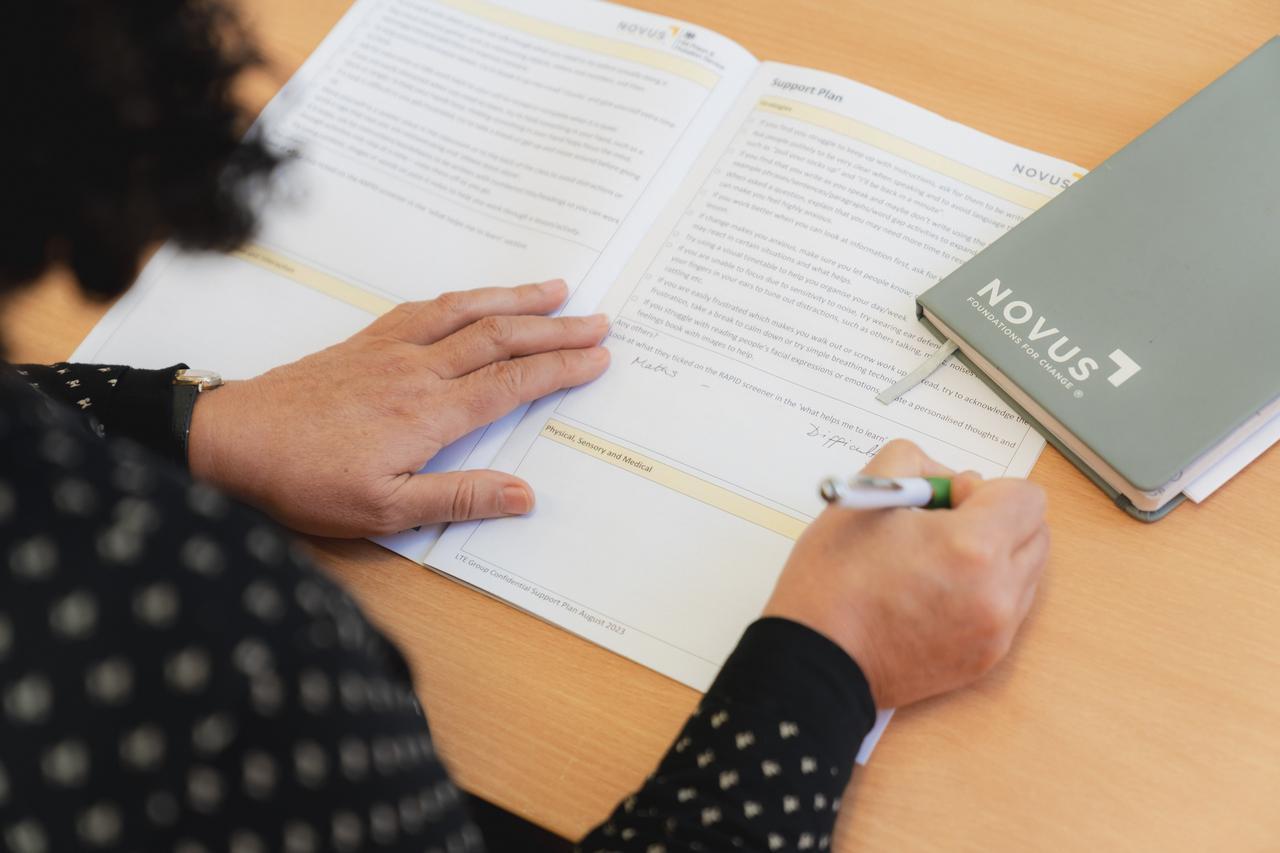
Individual learning plans help tailor education to the learner’s starting point, goals and support needs. They can set out the pace, structure and methods that will help the learner make progress. For some learners, this may mean breaking tasks into smaller steps. For others, it may involve extra time, one-to-one support or more practical approaches to learning.
Reasonable adjustments
Reasonable adjustments give learners the tools and conditions they need to participate fully.
These can include:
- Extra time for assessments
- Coloured overlays for dyslexia
- Assistive technology
- Simplified written instructions
- Reader pens
- Audio versions of learning materials
- Quiet spaces where appropriate
Ofsted has seen examples of support for prisoners with learning difficulties and disabilities, including coloured overlays, pen grips and line trackers.
Specialist teaching strategies
Adapted teaching can also include specialist strategies such as multisensory phonics, structured literacy, chunked information, visual cues and regular low-stakes recall.
These approaches can be especially helpful for learners who struggle with working memory, processing speed or confidence in reading and writing.
Trauma-informed delivery
Many learners in custody associate education with failure, embarrassment or punishment. A trauma-informed approach recognises this and focuses on rebuilding trust before pushing too quickly towards outcomes.
This means creating a calm, respectful learning environment where learners feel safe to ask questions, make mistakes and try again.
Skilled tutors and support colleagues
Inclusive prison education relies on skilled educators who can identify needs, adapt delivery and work with learners in a person-centred way. SENCos, tutors, trainers and support colleagues all play a vital role in making sure learners can access the right support and make meaningful progress.
How Novus delivers inclusive prison education in practice
At Novus, inclusive prison education is embedded across our delivery. We support learners with a wide range of needs through functional skills, vocational training and wider programmes, helping improve prison education accessibility and ensuring learners can engage with education in a way that works for them.
Across functional skills
English, maths and digital skills form the foundation of effective prison learning. For learners with additional needs, these subjects are delivered at the right level and pace, often beginning at entry level for those with the most unmet educational needs. This personalised approach helps learners build confidence and develop the core skills needed for further learning, qualifications and employment. Learn more about our digital skills in prison education.
Across vocational training
Vocational training provides practical, employment-focused opportunities while embedding English, maths and employability skills into real-world learning. This approach helps ensure learners with literacy difficulties are not excluded from qualifications and can continue progressing through education and training pathways. Find out more about our education and training provision.
Across wider programmes
Not every learner engages through a traditional classroom environment. Creative arts, enrichment activities and wider personal development programmes can offer alternative routes into learning, helping learners build confidence, communication skills and motivation. Explore our adult prison education provision.
What adapted support can look like
A learner with dyslexia may find lengthy written tasks difficult and require additional support to engage with learning. Through assistive technology, adapted resources and learning materials broken into manageable sections, learners can access education more effectively and work towards qualifications that may previously have felt out of reach. These practical adjustments demonstrate how prison education accessibility can help learners participate, achieve and progress.
The link between unmet learning needs and reoffending
Learning difficulties do not cause offending. However, when learning needs remain unidentified or unsupported, learners may be more likely to disengage from education in custody, reducing opportunities to gain qualifications, develop skills and prepare for employment after release. This highlights the relationship between learning difficulties and offending and the importance of accessible educational support.
Ministry of Justice research found that prisoners who participate in learning activities have lower reoffending rates after release, with rates of 34% for learners compared to 43% for non-learners. While education alone cannot address all factors linked to reoffending, these findings demonstrate the value of meaningful educational engagement in custody.
Identifying and supporting learners with additional needs is therefore more than good educational practice. By removing barriers to participation, prison education can support rehabilitation, improve employment opportunities and help address some of the challenges associated with learning disabilities and crime, and learning difficulties and offending.
Learning difficulties are significantly more common in custody than in the general population, and many learners enter prison without a diagnosis or access to appropriate support. Early screening, reasonable adjustments and specialist teaching can help identify these needs and create opportunities for learners to engage with education in a way that works for them.
At Novus, we deliver inclusive prison education across functional skills, vocational training and wider programmes, supported by tailored learning plans, accessible teaching approaches and specialist expertise. By helping learners build confidence, develop skills and achieve qualifications, we support meaningful progression and preparation for life beyond custody.
To learn more about our education and training provision or discuss working with us, contact our team.